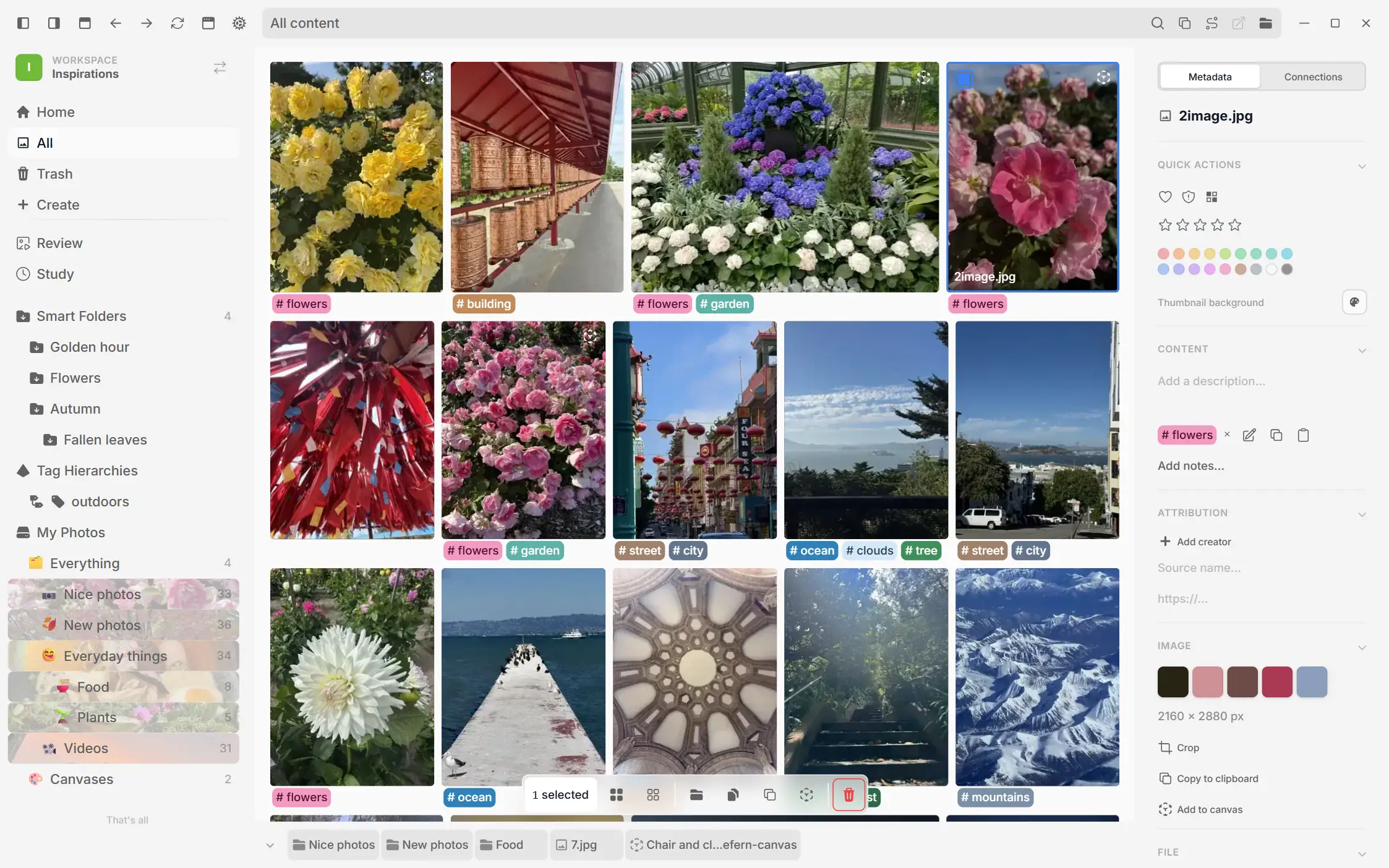
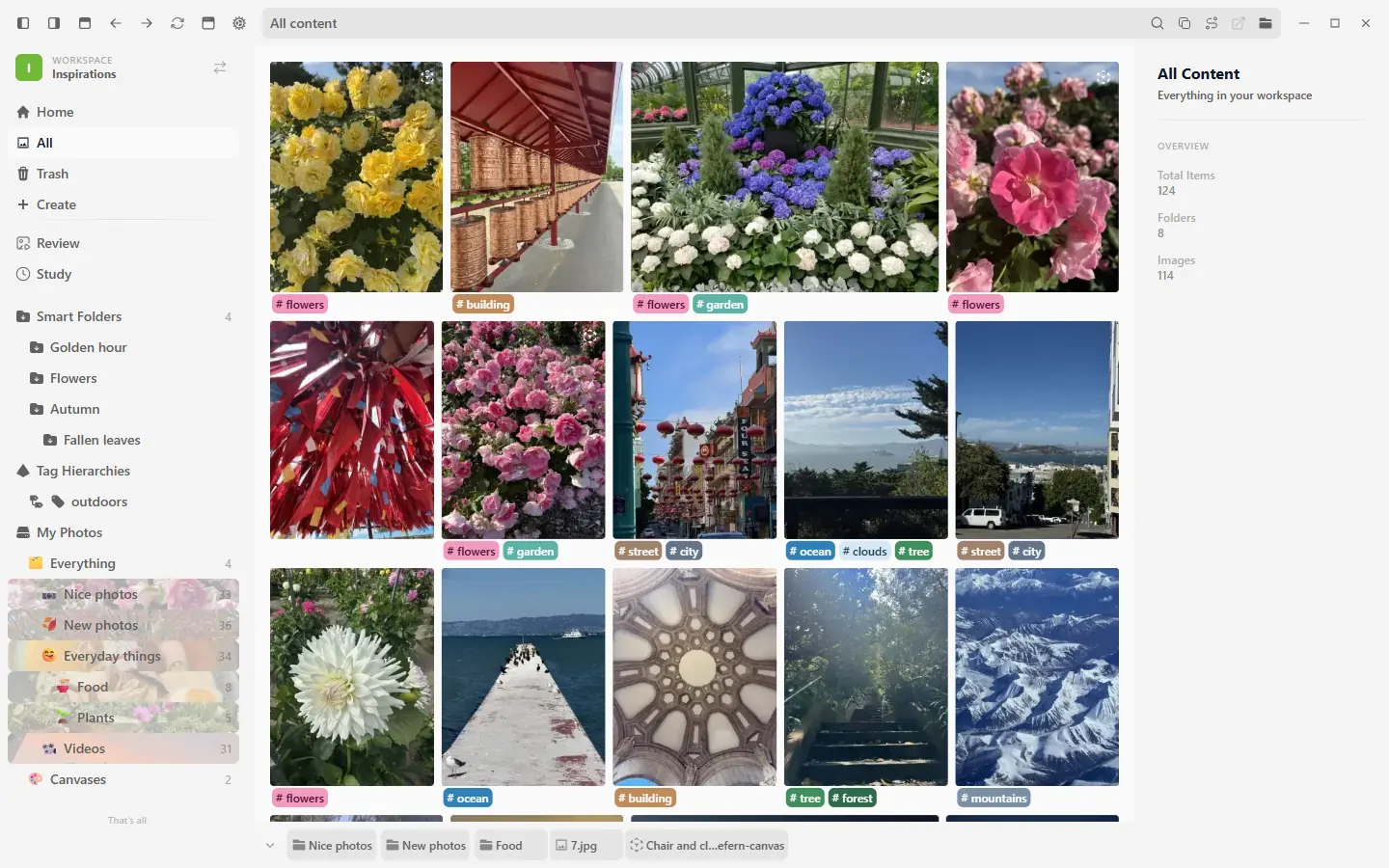
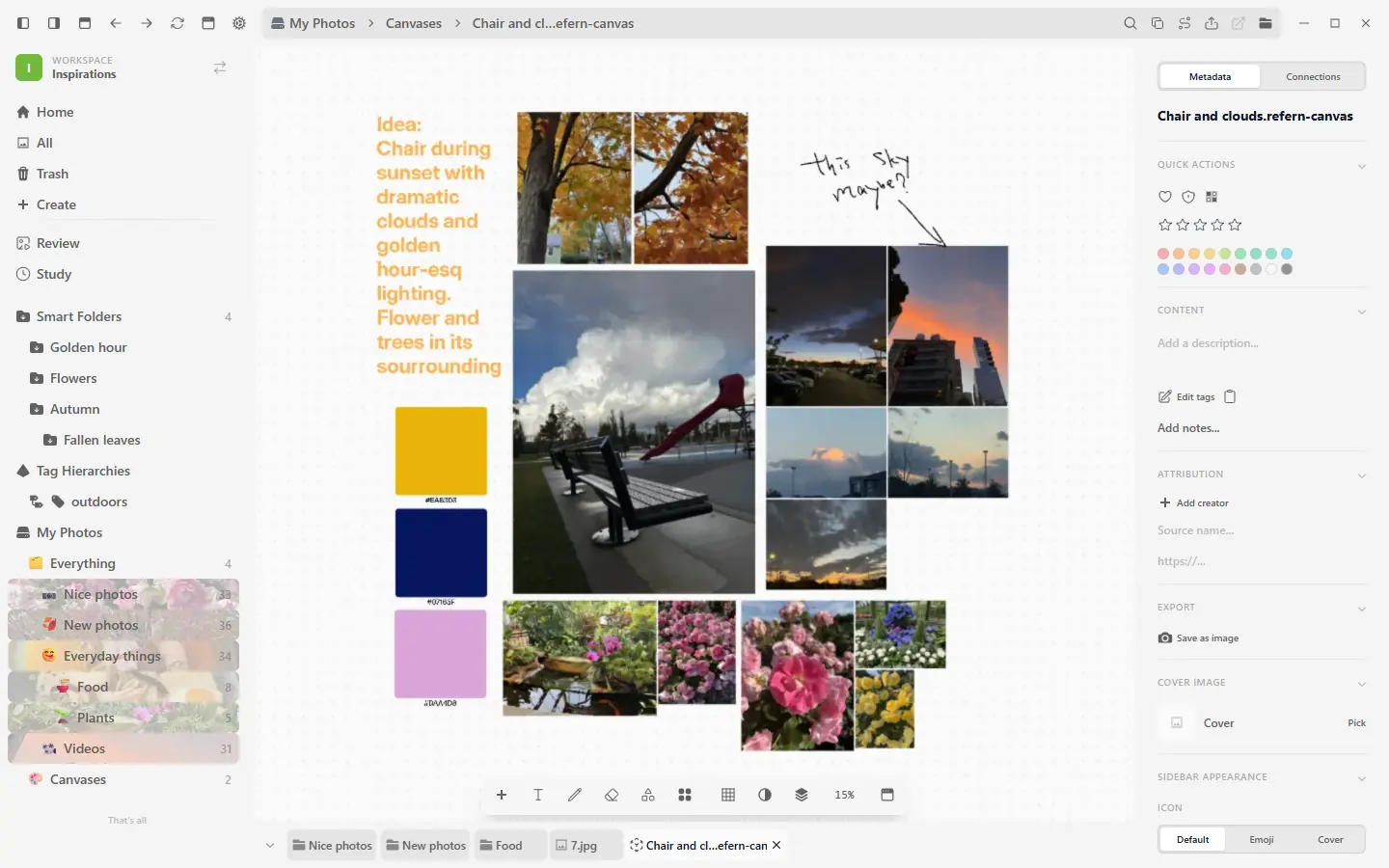
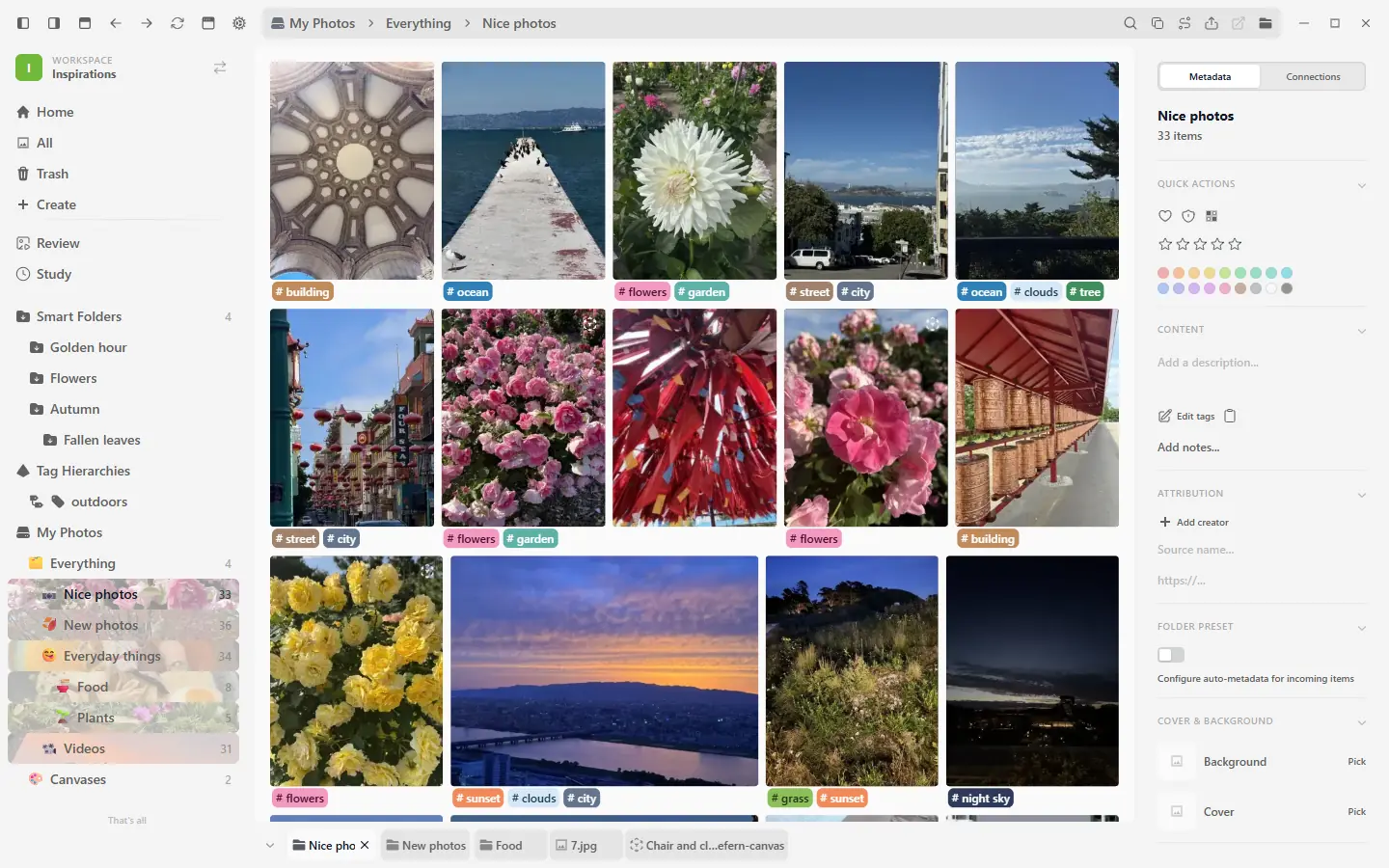
refern is a library and reference board for your images, videos, PDFs, and working files. Save from anywhere, find anything again, and lay it out beside your work.
It replaced PureRef, folder searching and pinterest for me!
Felipe Melo
Refern replaced Pinterest and PureRef for me! The tagging system is powerful and the canvas system is really helpful as an inspiration board!
Laveren
Refern lets you manage your files without trapping them in an ecosystem like Eagle, and gives you greater control and much more features than Allusion.
.yobmot
It has everything an artist would need for reference, so much value for the price, so much.
Romualdo Dias Santos
It link to my folder and file instead of duplicate it. So it become the center of my Media management now.
Nguyễn Duy Kiên
A clean modern layout, that notion or obsidian vibe, but with a working canvas system
It gives me the organization tools I need without getting in the way of actually browsing my assets.
1n9_
I wanted to organize my Pinterest and local library, but I couldn't found something that worked on linux.
Jose Ramirez
i love the browser extension implementation, it has little icon on the corner of every image so i can save it quickly
tuan
I'm very grateful to come across this application and for the time it saves me
Kenny, @revachuli on IG
What stands out is respect towards the customer - clarity of communication, one-time purchase model, financial parity for users from around the world.
@mnsn
Best Linux alternative to Eagle!
u/SlobbedKnob
PARECE SER LA HERRAMIENTA PARA LOS CREATIVOS QUE REQUIEREN DE UN ASISTENTE PERO QUE TE PERMITA MANTENER LA CREATIVIDAD
OD_VIAL
It replaced PureRef, folder searching and pinterest for me!
Felipe Melo
Refern replaced Pinterest and PureRef for me! The tagging system is powerful and the canvas system is really helpful as an inspiration board!
Laveren
Refern lets you manage your files without trapping them in an ecosystem like Eagle, and gives you greater control and much more features than Allusion.
.yobmot
It has everything an artist would need for reference, so much value for the price, so much.
Romualdo Dias Santos
It link to my folder and file instead of duplicate it. So it become the center of my Media management now.
Nguyễn Duy Kiên
A clean modern layout, that notion or obsidian vibe, but with a working canvas system
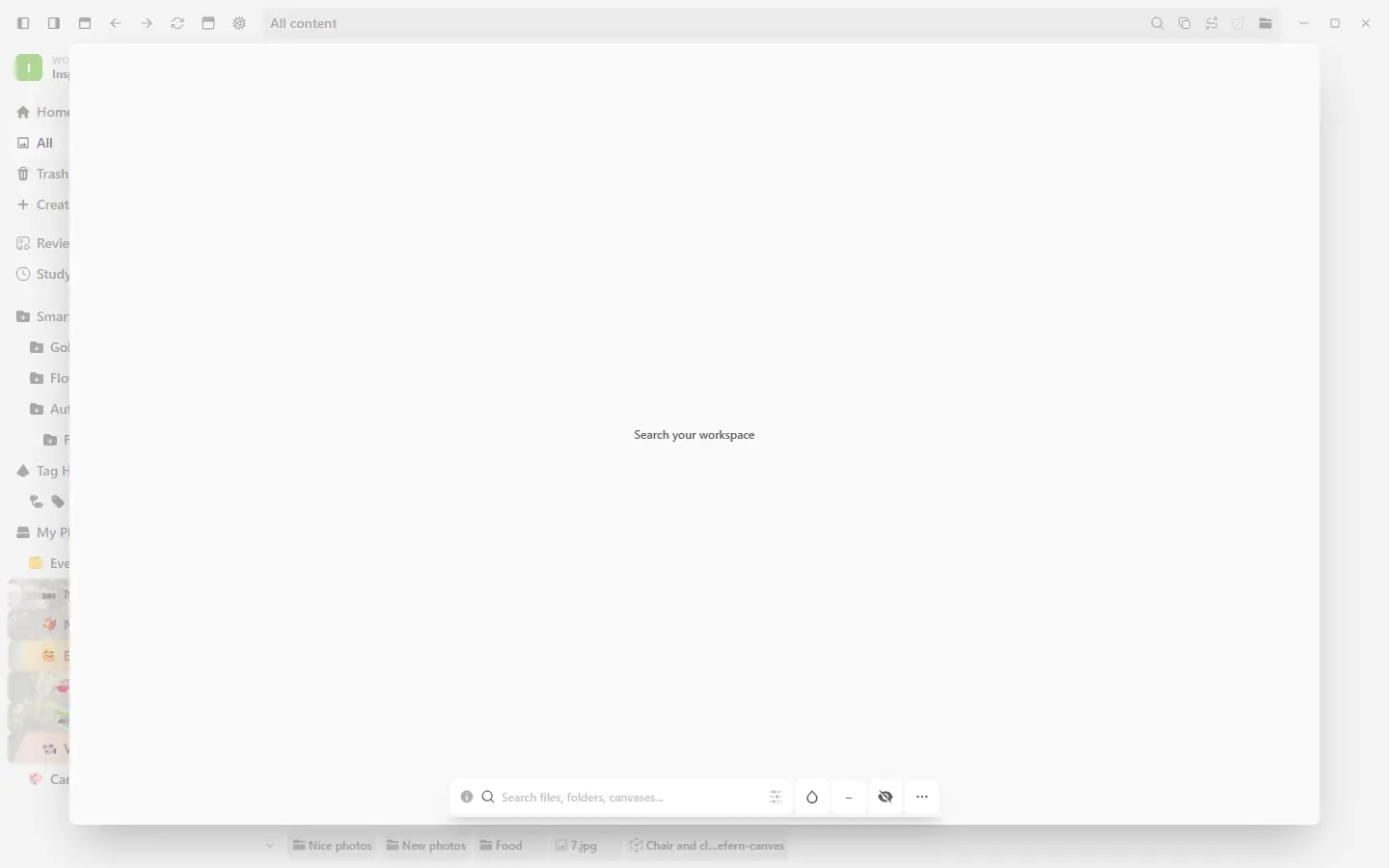
Need a pose, a color, or a certain look? Search by tag, color, or shape, like portrait, square, or 16:9. Pick an image to find others that look like it.
Bring back a reference you saved weeks ago, or spot something new in your own files.
Need a pose, a color, or a certain look? Search by tag, color, or shape, like portrait, square, or 16:9. Pick an image to find others that look like it.
Bring back a reference you saved weeks ago, or spot something new in your own files.
One window for tags, hierarchies, categories, creators, and presets. Find likely duplicates, merge them, and add aliases so every spelling finds the same tag. Rename many tags at once with a prefix, a suffix, or find and replace. Check the preview first, and undo if you need to.
Crops, groups, and the canvases an image lives in all stay connected back to the source. Press Ctrl+G to group a selection in the grid, and Ctrl+Shift+G to ungroup it (Cmd on macOS).
autumn-leaves.jpg
3 connections
Warm light cropcrop
Golden hourcanvas
Autumn palette studygroup
Timed study
Practice with your own references and track sessions on a calendar. Keep notes, see your streaks, and link the work you made. Add work to any day, even when you did not use a timer.
Session history
5-day streak
M
T
W
T
F
S
S
12 sessions · 4h 18m this month
Gesture warm-up
Notes saved · linked work added
Replay
Built for huge libraries
Browse, search, and edit libraries with a million items or more. Load small parts as you go, select across the full results, and track large jobs as they run. Speed depends on your files, drive, and computer.
Find a file in refern, then drag it into your project or open it in your usual app. Go from finding an idea to working on it.
Start with the folders you already have. refern reads those files where they are, so you do not need a second copy of your library. Imports and web saves can add new files.
Save from the web.
See something you want to use later? Save images and videos with the free refern Clipper. Videos from Reddit, Pinterest, and X keep their sound. Press Alt+Shift+S to capture part of the page, or Alt+right-click to save in one step. Add tags and creators as you save. The web link stays with the file, so you can go back to its source. Saving videos needs refern 1.10.1 or later.
Yes. $35 once, updates included, and no subscription. Try the whole app free for 30 days before you pay.
Your files and data stay in their folders on your disk. You can still get to them. After 30 days, you need to buy a license to keep using refern.
Yes. During the 30-day trial, with no card needed, you can pin a board above your drawing app and test it with your own work. Transparency and click-through controls are available on Windows and macOS. On Linux, the board stays on top, but those two controls are not available.
When you add a folder, refern reads the files where they are. It does not move them or make extra copies. Imports can add files. For example, Eagle import copies each file once. If it belongs in more than one folder, refern uses links to that copy.
Yes. Copy files or drag them into another app or a folder. You get the original files. You can also open a file in your usual app or choose a different app.
Yes. Open Settings, then Import. Eagle imports keep your folders, tags, ratings, and source links. Files can still appear in more than one folder. Only file types allowed in your workspace are brought in. PureRef 2.x boards become canvases you can edit. Allusion imports keep your tags. Your old libraries stay as they are.
Yes. Open Settings > Import and paste full public board links or board section links. Each board goes into a separate folder. You can queue several boards, follow progress, and review or resume previous imports. If you pause or cancel, you can still add the pins already downloaded. Private boards and links to individual pins or profiles are not supported. Some pins may not transfer; check the import report.
No. You can download Auto Tagger models to suggest tags and read text in images. They run on your device and can use your graphics chip. You can also set up Search by meaning to find images without adding general tags. To add your own tags, hover over an image and press T for Quick Tags. To catch up on untagged files, open Review, start with the files that have the fewest tags, and tag them one at a time with the keyboard.
Yes, if you allow it. Turn on Settings > Local API and create a token. Scripts and assistant apps on your computer can then search and organize the open workspace. It is off by default, works only on your computer, and no token can delete files from disk.
No. Images and videos are on by default. You can turn on PDFs, design files, 3D files, fonts, archives, code, or all file types. You can preview PDF pages and open them in refern. PSD, PSB, Krita, OpenRaster, Clip Studio Paint, and Procreate files show a preview you can zoom. It is a flattened image, without layers. Other files use the preview your operating system makes, where it has one. Otherwise they show an icon for their file type. AVIF previews keep clear backgrounds.
You do not need an account to use the desktop app. You can browse, search, make boards, view files, and practice offline. Your library stays on your device. You need the internet to activate a license, check for updates or trial time, download optional models, send feedback, or save images and videos from the web.
Three, on any mix of Windows, macOS, and Linux.
Yes. Commercial use is included. One license covers one person on up to three devices.
Try the whole app free for 30 days, with no card needed. Since you can try it first, purchases are final. A refund may still be possible in limited cases if you email within 5 days of buying. See the refund terms you agree to before using the app.
Come share what you are working on.
Meet other artists and designers on Discord. Share your work, ask for help, or tell us what would make refern more useful to you.